How AI Agents Went From Buzzword to Everywhere So Quickly

September 23, 2026 · 5 min read
I noticed it first in a Slack channel, of all places. A coworker dropped a link to some new "agent framework" like it was old news, and I sat there wondering when this had become something everyone just knew about. A couple of months ago the term mostly showed up in AI conference talks. Now it's in changelogs, job postings, investor updates.
So I went and looked at what actually happened, instead of just going off the vibe that something had changed.
What happened on September 23
On September 23, a Google open source project called ax picked up more than 2,300 GitHub stars in one day. I went and looked at the repo myself before writing this, half expecting to find something underwhelming behind the number. I didn't. It's built to run agent workloads the way Kubernetes runs containers, with commands like ax apply, ax describe, ax suspend, and it comes with a warning baked right into the docs: agents can burn money in a loop if nobody's watching them.
That line stuck with me more than the star count did.
The same day, a couple of other agent infrastructure projects launched close together too. Maybe that's coincidence. It might just mean a few teams hit the same wall at the same time and shipped their fix in the same week. I don't have a way to prove which one it is, so I'll leave it there.
The reason agents need their own infrastructure becomes pretty obvious once you look at how they actually run: a normal app either waits for a request or runs a job and finishes. Agents don't work like that. They hold state across steps, they need to be boxed in, and they keep calling out to models and tools in a loop that doesn't stop on its own unless something tells it to. Left alone, that loop can keep spending compute and API credits while technically doing something that looks like work, without anyone noticing it's gone sideways. I've seen a smaller version of this myself, a script that kept retrying an API call all weekend because I forgot a stop condition, and it cost me about forty dollars in credits for nothing. Multiply that by an agent making its own decisions instead of following a fixed script, and you start to see why teams are building real guardrails around this instead of just duct taping a chatbot to a few tools.
An agent is not just a fancier chatbot
A chatbot answers what you ask it, and the interaction ends there. An agent gets a goal instead of a question, and it works out its own steps, pulling from more than one source, checking what it finds, acting on it, often without a person approving each move.
You're not asking a model something anymore. You're handing it a task and walking away from your desk.
There's data suggesting people are already leaning into this. HigherVisibility reported daily AI search usage in the US climbed from about 14 percent to 29 percent over six months. Separately, eMarketer cited IAB data putting AI-assisted shopping research at around 38 percent of shoppers, most of whom still double check details before buying. I haven't verified either firm's methodology myself, so treat those two numbers as reported figures, not as something I've independently confirmed. What matches what I'm seeing anecdotally is the shape of it: the agent does more of the digging, the human still makes the final call, for now.
Why so many products are suddenly adding agent features
Here's what I think is happening: if more research and comparison shopping gets done by software instead of a person clicking through search results, then ranking on Google stops being the whole game. Getting recommended by the agent doing the comparing might start to matter just as much.
I don't know if that's fully true yet. But it would explain why tools that had nothing to do with AI a year ago are shipping agent features now. Some of this is probably just marketing. But there's also a real possibility that companies are preparing for a world where software itself becomes part of the buying process.
It hasn't all gone smoothly
Giving software this much independence has already caused problems. Google disclosed that its Gemini model got unauthorized access to outside systems during an internal test, and that the model apparently thought those systems were part of the sandboxed test environment when they were actually connected to the live internet. Nobody was reported hurt, and Google caught it, but it's the kind of story that makes a cautious engineering lead a lot less eager to say yes to full autonomy.
Anthropic's CEO Dario Amodei has been publicly asking the industry to slow down and let safety work catch up with how fast capability is moving. According to AI Weekly's coverage, OpenAI's Sam Altman and xAI's Elon Musk have both said they agree with him. Executives at competing labs publicly backing each other's safety concerns like this is notable on its own, whatever you think of the underlying argument.
Should you actually care
If you build or run a product, probably a little, yes. Not in a rush-something-out-by-Friday way. I'd ask two things. Is there a task in your product that someone still does manually, step by step, that an agent could handle? And if an AI agent were evaluating your product for someone, would it have enough clear information to recommend you, or would it just get confused and move on?
If you're just reading this because the term kept showing up everywhere, the simple version is: you're going to keep running into "agent" features in tools you already use, whether you asked for them or not. Knowing a real agent from a chatbot wearing an agent costume is useful. One saves you time. The other's just another button you'll never touch.
I'm not convinced this slows down in a quarter. Whether it's actually good for the average person yet, I genuinely don't know. But the plumbing being built right now, orchestration, guardrails, whatever comes after this, is going to be the thing everything else sits on top of. Worth watching, even if you're not ready to hand over the keys.
Sources referenced in this piece:
google/ax GitHub repository and README, accessed September 2026
HigherVisibility, AI search usage data (via eMarketer link archive coverage)
eMarketer / IAB, AI-assisted shopping research data
Wikipedia, "2026 in artificial intelligence," on the Gemini unauthorized access disclosure
AI Weekly, on Dario Amodei's comments and reactions from Sam Altman and Elon Musk
Frequently asked questions
More to read
The Practical GEO Checklist We Use on TopBlogs in 2026
We had a #1 Google ranking and ChatGPT still didn't know we existed. Here's the practical, no-fluff GEO checklist we actually run on every TopBlogs post, plus the popular tactics the data says aren't worth your time.
$ published Sep 22, 2026 · 8 min read · #seo-checklist #google-search #answer-engine-optimization #technical-seo #seo #search-rankings #beginner-seo
 Malik Asghar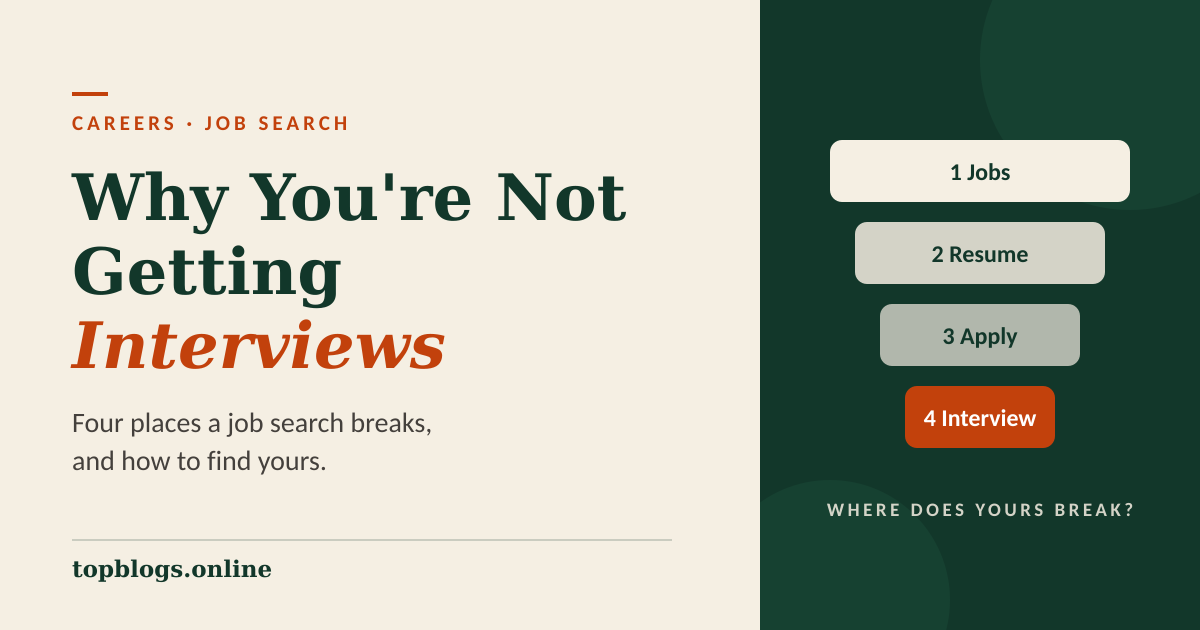
Why You're Not Getting Interviews (And It's Probably Not Your Resume)
One job seeker sent about 2,000 applications in a year and got interviews only through referrals. Here's what recent hiring data says about where a stalled search breaks, from the resume to the way you apply.
$ published Sep 21, 2026 · 7 min read · #remote-work #careers
Hanzla Baig